Leone’s Money Monitor Monthly for August 2010

August 1, 2010

By  Edward Leone Jr. DMD MBA RFC

Contact Information

Dental                                www.leonedmddentalcare.com                              

Financial Planning       leonee@vzw.blackberry.net

One of the goals of this blog is to invite interactivity. There were two responses to the July blog sharing information and opinions.

Respondent one talked about DOW support at 9800 and the need for the economy to reset while the stimulus  has a temporary affect and added a trillion dollars to the national debt. Respondent one also shares opinions on the need to see solidarity in word-wide financial markets, good earnings numbers to effect investors thinking when it comes to investing in equities and reduced government spending while holding the line on taxes.

Respondent two is very concerned about the national debt and points out that 10% of tax revenues went to pay the interest on the debt in 2007-2008. This trend is likely to increase. He quotes Milton Friedman’s statement in which he recommends a monetary policy where the money supply is increased at a fixed rate ( gradual level) to avoid the detrimental effect on the value of the dollar caused by the many adjustments we are experiencing. He poses a question on the run up in national debt and whether or not we are at the point of no return.

What do you the readers think?

Peter Schiff, on Forbes.com, writes about austerity vs. stimulus stating that there is a shifting in philosophy within the industrialized world which has caused governments with long-standing liberal attitudes on accumulating debt to become austereians, as he calls them, while the capitalists are becoming more socialistic. Schiff points out that Greenspan explains that lower deficits will restore confidence, diminish the threat of inflation and allow savings to flow to private investment rather than public-sector consumption. While Krugman, a devout Keynesian, states that cutting government spending will force the economy back into recession. He feels that flooding the economy with money is the stimulus that will cause consumers to spend and improve economic conditions at which time spending cuts, tax increases and higher interest rates which are necessary corrective measures can be tolerated. 

Will we have more stimulus or better discipline in government spending? What do you think?

The Motley Fool’s Morgan Housel, thinks that with the winding down of federal stimulus efforts, an economic slow down is evident.

Ken Sweet on Yahoo Finance thinks that the obvious anti-business White House and the environment in credit and regulation it has created is perpetuating the lack of business activity and the stalled creation of employment opportunities.

Mr. Prechter, the promoter of the Elliot Wave Theory, thinks that we are in for a market decline which could be the worst in 300 years according to reporting in the New York  Times. He predicts that the DOW will fall to bellow 1,000 in the next five or six years with depression and inflation factors as a grand market cycle comes to an end. Prechter say that cash is the place to be.

I am not so sure that we are in for as much trouble as many may think. If one does the math, it is clear that within all style boxes (large cap value, large cap growth, mid-cap value, mid-cap growth, small cap value and small cap growth) price to book ratios are at bargain levels. The likely trend for stock prices may be up, but when? Will this movement occur due to changes in government policy or in spite of government policy?

Do-fundamentals-or emotions-drive the stock market? Goedhart, Koller and Wessels write in the McKinsey Quarterly that emotions can drive market behavior in a few short-lived situations, but fundamentals still rule.  Behavioral finance theory points out that investors have a tendency to project current conditions and recent events into the future as the absolute for future outcomes. They also follow systematic behavior patterns in buy and sell habits due to momentum observed and may over react or under react to market anomalies. These irrational behavior patterns are generally accommodated for in market pricing over relatively short periods of time according to efficient market theory. How many times have we heard, “but this time it’s different”? Well, we shall see.

During these troubled times,  households with reduced income streams are having trouble maintaining a reasonable budget. Financial planners use financial ratios as a guide to demonstrate to families where their budgets may be distorted. Volume 6, Issue 4 of the Journal of Personal Finance has a great review on this subject written by Harness, Chatterjee and Finke. These ratios are helpful in identifying financial stress.  Once a personal financial statement has been constructed, the following are some ratios for analysis which can be applied: liquid assets/monthly expenses, total assets/total debt, liquid assets/total debt, total assets/total debt. I am sure you get an idea of how this analysis can help a financial planner and a client discover the status and financial health of the household budget.

Personal households are not the only entities having budgetary problems. What happens when a city goes broke. This subject is explored by Jonas Elmerraji in the Financial Edge. Through out history, he points out that this event is a rather rare occurence since governments most usually have ways of restructuring themselves. The bankruptcy code does provide for this event however, under chapter 9. Most usually the following factors would cause consideration of a Chapter 9: mounting pension expenses, loss of key tax revenue sources and lawsuits related to non-performance on credit issues. Does any of this sound familiar within your community environment? Be very selective in chosing municipal bond investments!

Now that the President has signed financial reform legislation into law, we should spend a little time examining it’s content.  Much as is the case with health care reform, this is legislation spread out over many pages which contain a variety of directives, but little detail on regulations which are still to be established and written. There is a provision for a consumer protection agency under the control of the Federal Reserve Bank and funded by fees charged to banks. It will set rules to avoid unfair practices regarding the issuing of consumer loans and credit cards, but exempts the auto dealers. Consumers will have better access to credit scores and debit card swipe fees will be caped. Mortgage underwriting will be tightened such that incomes sources must be demonstrated and not just stated. Fixed-equity annuities are exempt from additional regulation. (Are we seeing a pattern here which demonstrates how our most powerful industries can lobby the Congress to get their way in many matters?) There are a variety of mandates on banks which will raise reserve requirements, give FDIC additional powers to break up the big guys if necessary and institute more strict auditing activities for the Federal Reserve Bank. Derivative and swap trading will be more transparent and credit rating agencies will be under scrutiny over how they formulate their ratings. There are also oversight provisions concerning compensation practices in the financial industry. I am disappointed that there is no iteration of adjustment in the operations of Freddie Mac and Fannie Mae. Oh well, the Congress has control there as we have witnessed over the past dozen or so years. They are so well-managed and the oversight has been so complete that the government has been forced to take over ownership of a significant level of their assets. Good job U S Congress!!

For The Record:

DOW                     10,465.94

NASDQ                 2,254.70

S&P 500              1,101.60

Suggested Reading:        “Buffettology” by Mary Buffett and David Clark

Leone’s Money Monitor Monthly for JULY 2010

June 27, 2010

By Edward Leone Jr. DMD MBA RFC

Contact Information

Dental Care:   www.leonedmddentalcare.com

Financial Planning: leonee@vzw.blackberry.net

     The money and financial issues just keep coming our way. We will soon see the final bill on financial reform. It is interesting to observe the rhetoric coming out of  Toronto, Canada at the G 20 meeting. The Europeans and Canadians want to reduce government spending to avoid further debt accumulation while  Mr. Obama wants to creat more debt to offer additional economic stimulus.  Based on the performance of financial markets globally, it may very well be that we are in the 2nd dip of what may turn out to be a double dip recession.  If this is the case, given the head winds that the US Congress and the Executive have created for us with the climate of chaos and uncertainty for business, we may find ourselves in a prolonged economic recession going on into the future for perhaps another twelve to eighteen months. The growth rate for the first quarter of the years was adjusted down from 3% to 2.7%. New home construction starts are at very low levels in particular since the tax credit to new home buyers has been eliminated. The sales of autos and other durable goods, although improving,  are also in a slump. It is clear that the consumer spark to economic recovery is not very strong if it even exists at all. Continued concern over the financing of European governments’ debt and the restriction of oil exploration due to environmental concerns also cloud the picture for a timely economic recovery. The S&P 500 Index is down approximately 12% from its April 2010 high. Our industrial out put is hovering around 69%. When compared to the average of  81% over recent years, we can see that productivity is fragile as is the potential for an immediate drop in unemployment. Many firms showing profitability are doing so by generating a smaller level of production at much lower cost and with many fewer employees. The June 6th issue of Bloomberg Business Week makes a very interesting observation on page 45 regarding the rush by many investors to precious metals in these trying times. It appears that, “Despite the recent runup, investors who bought at the historic peak are still waiting to break even. After adjusting for inflation, gold is at just half the level it reached in 1980, when the price rose to $850, equal to $2,266 today.”  This observation brings out a point I like to make with potential clients in discussions over the effects of inflation. You need to have almost three times the income you had in 1980 to have the same purchasing power today as you had then.  How is your purchasing power holding up?

     The doom and gloomers are having a field day. Such experts as Meredith Whitney, Nouriel Roubini, Robert Prechter, Nassim Taleb, Gary Shilling, David Walker and others are dutifully pointing out issues surrounding bad government decisions and the untenable growth of government social programs which cannot possibly be supported in their present form into the future as burdens which must be addressed and over come in order to foster economic growth. Harry Dent does much interesting research on the relationship between demographic trends and economic activity. His work is a great source for another angle on what is actually happening to us and what we should do about it. Once again let me state that the November election will be important in shaping the rate at which our economy recovers. I must caution that even with a significant change in direction by the US Congress, fiscal policy changes occur slowly.

     We have experienced a technology bubble and a real estate bubble over the past ten years.  Forbes.com in the month of June did a great job of describing the five steps in the development of a financial  bubble. They are as follows:

1. Displacement–The enamorization of a new paradigm in financial opportunity such as an innovative shift in technology or historically low interest  rates.

2.Boom–Pricing rises rapidly as the trend becomes recognized and publicized. Investors want into this once in a lifetime opportunity at any cost.

3. Euphoria–Caution is thrown to the wind as asset prices skyrocket.

4. Profit Taking–Smart money is selling positions and taking money off the table.

5. Panic–Asset prices reverse direction as investors and speculators are faced with margin calls and must sell at any price.

Will we take heed and recognize this pattern in the future when it occurs again?

     The impact that much of what is written in the above paragraphs has for the average working adult is in the sphere of retirement savings and the reduced or negative returns that many savers are seeing on their investments. The Financial Planning Association, in its May journal, quotes survey results which tell us that 57% of  participants feel that they are behind in their retirement savings.  The survey respondents say that they have little money to put toward retirement savings or that they have started to save too late in life.  In addition, 38% of respondents state that they are very concerned about health-care costs. We learn that it is typical that the newly retired individual does not want to take the risk involved with keeping an adequate allocation of equities in the retirement portfolio, not understanding that the risk incurred is that retirement funds may not last for a potential 30 year retirement period without the strong earnings yielded by equities over time. This is a prime example of behavioral finance which leads so many retired persons to buy annuities. Here, the retired individual incurs purchasing power risk with a fixed annuity not considering  how the fixed benefit will work under future inflationary trends. Those who invest in variable annuities with a guarantee minimum return many times experience high fees and returns over time which are more like those from a bond portfolio as opposed to an equity yield experience. Financial advisers are challenged many times to have the client realize the significance that the withdrawal rate has during the distribution phase of a portfolio. Clients who are concerned with the prospect of running out of money before end of life need to examine the prospect of working longer, saving more or spending less to gain additional financial security. Those of use who are true financial planners must also be educators for our clients.

Suggested Reading:    “Power Hungry: The Myths of Green Energy and the Real Fuels of the Future”  by Robert Bryce

For the Record:

DJIA          10,143.81

S&P 500   1,076.76

NASDAQ   2,223.48

Leone’s Money Monitor Monthly for June 2010

May 31, 2010

     Hi All, my name is Ed Leone. I have been a clinical practicing dentist for 39 years (need a dentist www.leonedmddentalcare.com) and have a very high level of interest in financial matters. In 2005, I achieved a professional studies certificate in financial planning and in 2009, an MBA in financial planning. As you read, you will determine that I am an expert on only one thing–my opinion. The purpose of this blog is to share information. You can contact me over blog issues or financial planning issues at leonee@vzw.blackberry.net.

     There are more than just a few pressing issues of late which deserve our attention. One of those is the prospect of a Value Added Tax to help government cover the programs and debt it has committed to in this past year and four months. The VAT affects consumers since it is a tax on consumption. It is a national sales tax. You buy and you pay. It is not a progressive tax. In European countries where the VAT is prevalent, the revenues are used to fund such government programs as health care. By observation in these countries and as a matter of common sense, it is easy to see how such a tax will slow economic growth since with higher consumer prices, there is less money available for just about everything else. Another has to do with current studies done by Fidelity showing that the average 65 year-old couple retiring this year will likely spend $250,000 on health care  during their remaining life times not including nursing home costs which could add up to $80,000 per year. How are the members of the baby boomer generation going to deal with this? Along with all of this, we have the potential for another colossal piece of legislation moving through the congress in the form of  financial reform. Bills have passed through the House and the Senate and are now due for reconciliation through a conference committee structure.  These bills deal with consumer protection, executive compensation, the rating agencies, credit derivatives and issues surrounding systemic risk. Outcomes will be a significant matter to the financial industry and citizens in general. This legislation is likely to be as sweeping as the measures taken in the late 1930s.

     I have spent time in previous blogs talking about the Keynesian influence on strategies executed by the federal government to bring us out of recession, but have not spent any time discussing the alternative theory which I believe could be more effective. I am referring to supply-side economic theory. President Reagan quoted this theory in his push to increase tax cuts as an incentive for people to save and invest in order to expand economic activity which would trickle down to the smaller participants in the economy. The theory affects tax policy, regulatory policy and monetary policy to increase economic growth. The Keynesian approach calls on government to stimulate the economy with fiscal and monetary strategies in the event of recession to mitigate a fall in consumer demand which is a temporary measure.  The supply-side theory says that demand does not matter. If there is over production, there is excess of inventory which is reduced as prices decrease. The same dynamic works for shortages. Prices go up creating an incentive to produce more. Lower tax rates give people incentive to be more productive and invest more. If regulatory policy is contained, this is a further incentive to produce and invest. Supply-siders like to see a monetary policy which leads to discipline over the money supply to stimulate growth without the treat of excessive inflation.

     So where are we now? First quarter 2010 GNP grew at a rate of 3%. This would be respectable under conditions where we were at the peak of the business cycle. During the acceleration phase, we need more like 8%. We are not seeing that rate of growth due to actions and lack of actions by the US Congress as we have noted before. Unemployment is a lagging indicator and is not likely to reduce significantly in the near future with growth rates as they are now.  These factors are likely to keep inflation at bay for now. The economy exhibits too much  excess capacity to foster much of a rise in inflation at this time. It is clear that problems in the European economy along with a wind down of the temporary stimulus crafted by the federal government are reflected in the poor performance of equity markets in the month of May. We need a credible policy that balances the federal budget. It is possible that in the forseeable future,we could see an economic train wreck in this country. If we see high inflation coupled with restrictive monetary policy and federal borrowing crowding out the prospect of a reasonable cost for business and private borrowing, we could find ourselves facing the same problems which now exist in Greece, Spain and Ireland.

For the Record:

DJIA 10,136.63

NASDAQ 2,257.04

S&P 500 1089.41

Suggested Reading; “‘Winning the Loser’s Game” by Charles Elis

Leone’s Money Monitor Monthly for May 2010

May 3, 2010

Hi All, my name is Ed Leone. I have been a clinical practicing dentist for the past 38 years (need a dentist www.leonedmddentalcare.com) with a very high level of interest in financial matters over the years. In 2005 I gained a professional studies certificate in financial planning and in 2009 and MBA in financial planning. You will learn after reading this blog that I am an expert in only one thing-my opinion. The purpose of this blog is to share information and to get your feedback. If you would like to contact me over blog issues or financial planning issues leonee@vzw.blackberry.net.

     Last month I talked about my short-term optimism over an economic recovery in our country. It is apparent to me that in spite of the continued road blocks which the US Congress has put in the way of business expansion, the business cycle is strong enough at this point in the acceleration phase to over come these head winds. The US Congress still needs to create an environment where business can be willing to take risk and be innovative. We need to see reductions in the tax structure, further committment to free trade internationally and reduced competition for available capital from government. If these steps are not taken, I fear that our economic grow will be severely slowed. So far, the Congress and the Executive have adopted fiscal policies which are Keynesian in nature only. We have not learned a thing from observing the past 20 years of economic strife suffered in Japan. Upon their banking collapse over real estate around 1990, the Japanese government chose to follow a path of continuing short-term stimulus make work projects and expanded government debt to the point that the government debt in Japan is at 120% of GDP. Not only is economic recovery still crawling along due to retention of toxic assets in bank portfolios (which are still slowly being reduced), but both federal and private pension funds are so poorly funded due to cost shifting to other areas of business expense and government services, that many Japanese citizens have had their retirement benefits severely reduced or taken from them.  Government stimulus does not create long-term employment situations which will lead to increased consumption and the flow of currency through the economy. When the stimulus from government ends, so does the jobs available.  We need to enhance business activity. The concept of expanding US Government debt by instituting new federal programs and then trying to pay off the debt with such mechanisms as a federal sales tax (Value Added Tax) and the inflation effect of monetizing the debt will put us in a very poor condition .  According to Bloomberg Business Week, there is $3.2 trillion sitting in money market funds that could be redeployed with the proper monetary and fiscal incentives to grow this economy.  Let’s just see where the future takes us.


 For the record:

DJIA     11008.61

NASDAQ     2461.19

S&P 500     1186.68

Sugested Reading   “Yes, You Can Still Retire Comfortably”  by Ben Stein and Phil De Muth

Leone’s Money Monitor Monthly for the Month of April 2010

March 24, 2010

Hi all, my name is Ed Leone. I have been a clinical practicing dentist for the past 38 years (need a dentist www.leonedmddentalcare.com) with a high level of interest in financial affairs. In 2005, I achieved a professional studies certificate in financial planning and in 2009 an MBA in financial planning. You will learn as you read that I am an expert in only one thing– my opinion. It is the purpose of this blog to share information and opinions. If you want to contact me over blog or financial planning issues   –   leonee@vzw.blackberry.net.

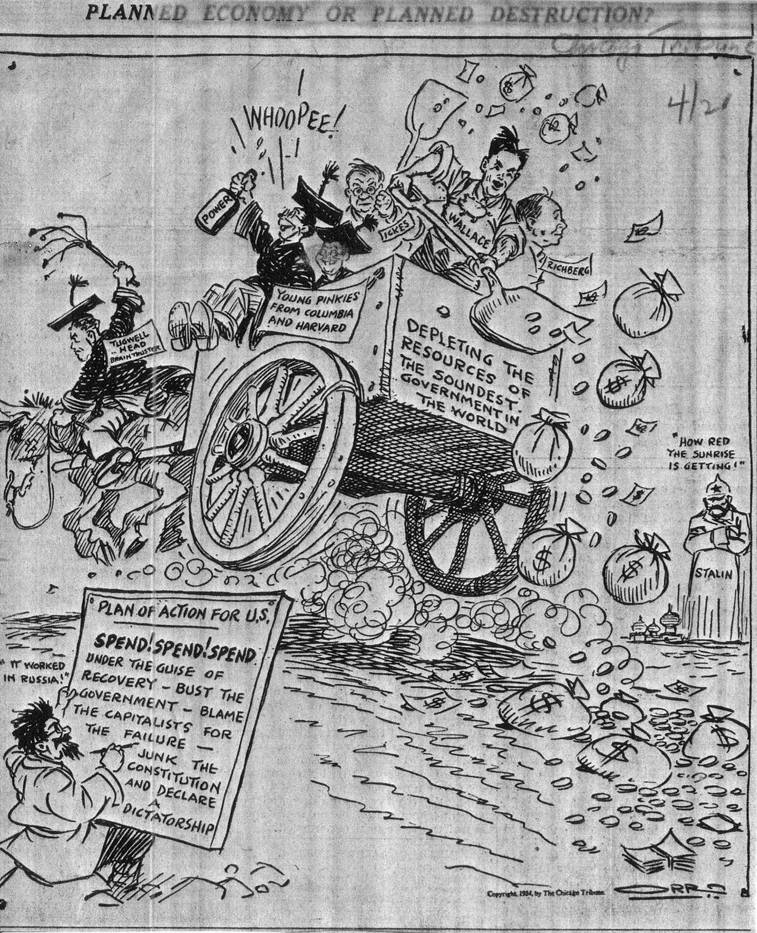
Regarding my March question, I believe that we are on a road to financial disaster as a society and a country. The health care reform vote on Sunday March 22 is continuing evidence of this trend in my opinion.  According to Jia Lynn Yang of Yahoo Finance, the health care reform strategy is a back-door tax. The legislation increases payroll taxes and transforms this tax into an income tax for high income earners. It also diverts taxes intended to support medicare to other health care initiatives. Taxes on capital gains and dividends will increase along with taxation on medical devices. Shawn Tully also of Yahoo Finance, explains that CBO (Congressional Budget Office) calculations are misleading in that one would interpret that their statements show a decrease in the deficit by $118 billion over ten years. This does not mean that debt will be lowered. CBO says the by 2020, federal debt will grow to 90% of GDP and that one in six dollars of Federal revenue will go to pay the interest on that debt. Government will have to borrow 40% of every dollar of new spending.  State governments and their citizens will find themselves burdened with much higher tax rates according to Michael Regan to fund the unintended consequences to states of this legislation.  The cartoon displayed bellow  appeared in the Chicago Tribune in 1934. Will we ever learn the lessons of history?

We clearly need to have the US Treasury and the Congress create an atmosphere of stability and discipline for our currency, even if it means going back to the gold standard. This is the only way to assure that we will establish a growing economy where business can take risk and be innovative while government must find ways to pay for the programs it develops without borrowing or printing money. Economic and market influences need to take center stage in government decision-making while politics is set aside. Richard Hoey of BNY Mellon tells us that the strongest economies in 2010 and 2011 will display three characteristics:

1. public policy which places high priority on economic growth relative to other objectives

2. no significant debt overhang

3. rising productivity of the workforce due to the diffusion of modern technology and business practices.

Will the US display these characteristics and grow the economy? It is my opinion given what is going on in European countries such as Portugal, Ireland, Italy, Greece and Spain with their government debt, high unemployment rates and restrictive government policies, that the US will fare well in its economic growth when compared to other economies globally in spite of our government’s inaction in setting forth tax structure and regulation which will stimulate business. Our economic momentum should be strong enough to move upward while government continues to present economic road blocks. This is a short-term prospective on my part. We will likely see economic growth, but at a slower rate than is usual for recovery from recession cycles historically. Our ability to sustain a growth pattern will depend heavily on a renewal of government policy which is favorable to business and free market principles.

For the Record March 24, 2010

DOW   10,838.8

NASDAQ   2,400.72

S&P 500   1,168.18

Recommended reading:   “How Capitalism Will Save Us”  by Steve Forbes and Elizabeth Ames

Leone’s Money Monitor Monthly for the Month of March 2010

February 28, 2010

Leone’s Money Monitor Monthly for the Month of March 2010

     Hi all, my name is Ed Leone. I am a clinical practicing dentist over these last 38 years (need a dentist–go to leonedmddentalcare.com) who has been interested in financial matters for the greatest extent of my working career. In 2005, I earned a professional studies certificate in Financial Planning and in 2009 and MBA in Financial Planning. The purpose of this blog is to share information and ideas regarding our currency, politics, economics, investments and planning.  Your input, ideas and questions are welcome at leonee@vzw.blackberry.net.

     Let’s start with an examination of the key element in the title of this blog, “Money”. What is money and what does it mean to us. “The History of Money” written by Jack Weatherford, tell us that it is a medium of exchange. But it has several internal characteristics throughout history which we must also consider. Money should represent a store of wealth and be a unit of accounting in addition to its purpose as a medium of exchange. Commerce has existed though much of the history of civilization. For centuries, this commerce was conducted in the form of barter. As civilization became more productive and industrially specialized, other forms of exchange had to be developed which were easy to transport and recognized as a trusted form of compensation for goods and services offered. Our US currency was developed shortly after the revolution and separation from England. It has up until 1971, when President Richard Nixon and the US Congress removed the dollar from the gold standard, been back by silver and then gold as a store of  wealth. Since 1971, the expression of wealth behind the US dollar has been the government’s power to tax the citizens of our country. It is my opinion that since August of 1971, our legislative and executive branches of government have not been the disciplined stewards of our currency which they need to be. They appear on many issues to use political expediency in making fiscal judgements rather than economic principles which would benefit the economy and US citizens. From time to time, they look like the gang that can’t shoot straight. This behavior has cost us dearly in the form of the purchasing power of our currency and its value in the exchange markets for currencies of foreign governments over recent years.   

     If you had a dollar in 1972, it had a purchasing power of a little less that 20 cents in 2008. This means that your compensation had to be 5 times greater in 2008 than it was in 1972 in order to have the same purchasing power for both periods. Have you been able to keep up with this inflation factor? In 1971, US GDP was $1.2 trillion and in 2008, $14.3 trillion. It appears that economic growth has more than kept up with inflation. In 1971, the Federal Budget was $230 billion and in 2008, $2.9 trillion. Government expenditures have certainly kept up with inflation and expanded to a great extent beyond due to expansion of government programs. In 1971, the Federal Budget was 19% of GDP and in 2008, it was 20.3%. These numbers do not include deficit spending by government. This is clearly where budget discipline breaks down. It is so much easier to borrow or print money to satisfy approved programs than it is to reevaluate and prioritize them or institute tax increases on the citizens to cover these costs. How do we as the voting citizens of this country instil within our elected officials the need to be good stewards of our currency in order to avoid financial disaster as the future unfolds? Have we arrived given current financial conditions?

     For the record as of Feb 28th, 2010:

Dow                        10,325.26

NASDAQ                2,238.26

S&P 500                1,104.49

Suggested reading:  The History of Money by Jack Weatherford